

Description
This curated short film program explores the environmental, social, and cultural consequences of Soviet-era extractivism in Central Asia.
Under Soviet rule, Central Asia functioned primarily as a vast source of raw materials. For decades, cotton, coal, uranium, oil, and gas were systematically extracted for export, with devastating consequences for local populations and the environment. The planned economy followed a clear division of labor: while key industries remained concentrated in the European part of the USSR, entire Eastern regions were reduced to resource extraction and the cultivation of monocultures. Uzbekistan and Turkmenistan were turned into sprawling cotton plantations, their rivers artificially redirected to irrigate the fields - a policy that led to the catastrophic drying up of the Aral Sea, one of the worst ecological disasters in history. Kazakhstan became the main uranium supplier for the Soviet atomic program. The landscape still bears the scars of radioactive contamination, most dramatically around Semey (formerly Semipalatinsk). In Kyrgyzstan, mining boomed under Soviet rule and entire towns were built for the extractive industries, many of them falling into decay after the USSR's collapse. Yet even in the post-Soviet era, mining remains one of Kyrgyzstan's most important economic sectors, now largely privatised and employing many day labourers.
The history of resource extractivism in Central Asia, profoundly shaped by Soviet policy, still remains little known in global discourse. This program presents four contemporary short films from and about the region that engage with this legacy from ecological and postcolonial perspectives. The films examine not only environmental issues but also the human dimension regarding land and labor, raising urgent questions about the region's (ecological) future.Curator: Azem Bekturova, art historian and film curatorGuest: Mila Zhluktenko, filmmaker
Films in this programme
Balqaş Jyry | The Song of Lake Balkhash
Artcom Platform · Kazakhstan · 2025 · 21'
Balqaş Jyry is a film by the women’s collective Artcom, created as a continuation of the long-term practices of care for the Lake Balkhash initiative. Through the movement of water, the breath of wind, and the rhythm of the steppe, Balkhash tells its story — a story of the profound bond between nature and humans, ruptured by colonialism, industrialization, and ecological violence. <br />Inspired by the poetic tradition of jyr and the steppe philosophy of qazaqliq, the film restores the lake’s agency — its ability to resist, its right to recover, and its future.
Black Wagon
Adilet Karzhoev · Kyrgyzstan · 2021 · 24'
There are more than 300 coal mines around the town of Sülüktü in Kyrgyzstan. 500 metres below the surface, light and air are scarce, and the coal beds grow thinner, too. We meet a group of miners who share labour and thoughts in their confined and unsafe underground workplace. Physical exertion and breaks alternate. In order to achieve the daily target, one must be both prudent and willing to take risks.
Adilet Karzhoev
Adilet Karzhoev, with over a decade of experience in both documentary and fiction filmmaking. His films, including Black Wagon(2019), Burul(2024), and Thank You, Doctor(2016), have been screened and awarded at international film festivals. He is an alumnus of IDFA Academy and the Berlinale Co-Production Market. Adilet currently serves as Head of the Department of Film, TV, and Media Arts at the American University of Central Asia and is the founder of the Bishkek Documentary Laboratory, which supports emerging documentary filmmakers in Kyrgyzstan.
Aralkum
Mila Zhluktenko, Daniel Asadi Faezi · Uzbekistan, Germany · 2022 · 14'
A desert landscape, as if from another planet. A few lonely, rusty shipwrecks. Low desert scrub grows around them to hold the sand together during the merciless storms. Aralkum, the Aral Desert, is the bare seabed, the last thing left of the Aral Sea. By weaving together different cinematic textures, the short film Aralkum re-imagines the dried-up Aral Sea, allowing an old fisherman to set sail one last time.
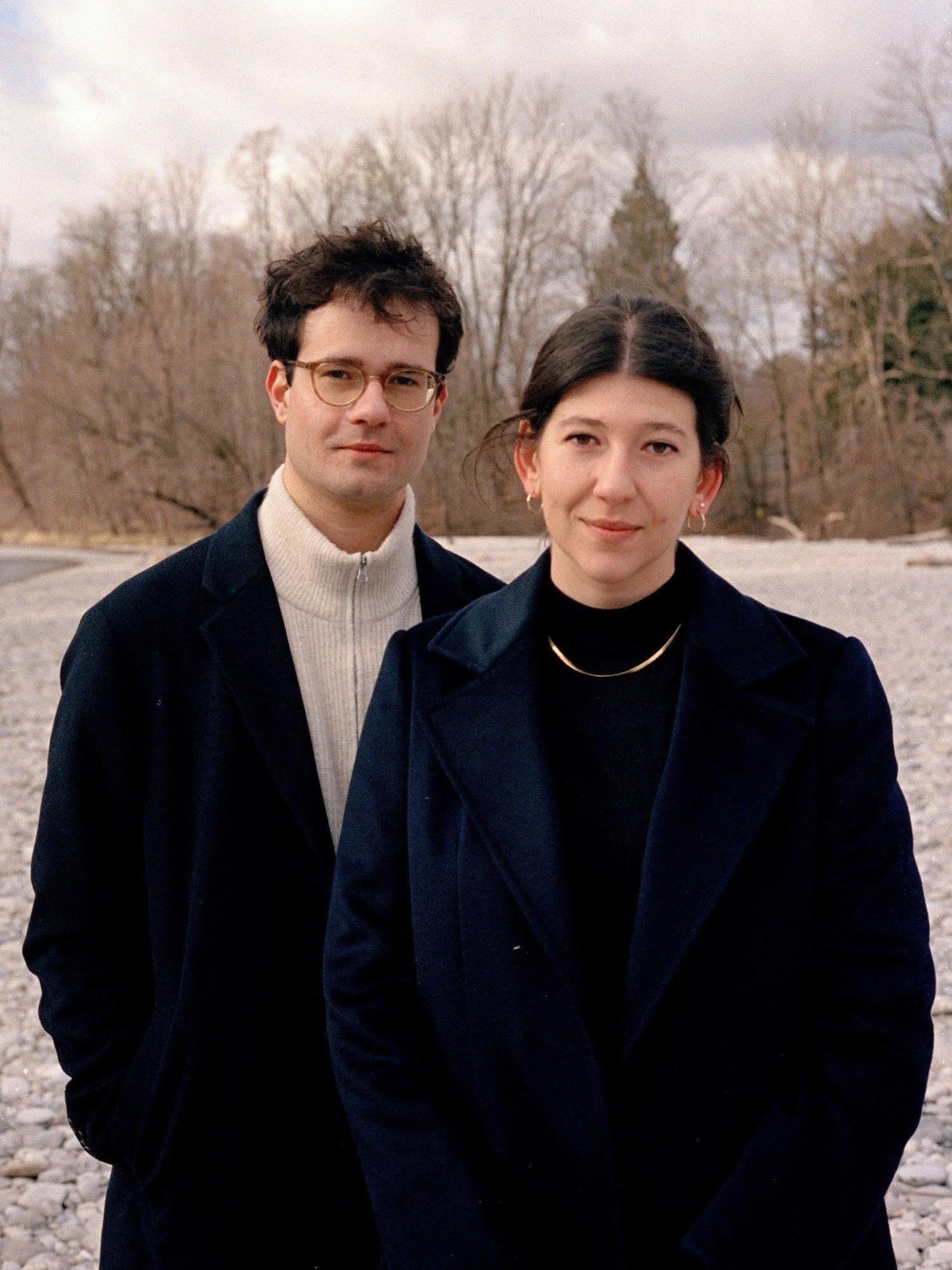
Mila Zhluktenko
Mila Zhluktenko, born in Kyiv, Ukraine, studied documentary filmmaking at HFF Munich. Her films have been screened at a number of international festivals including the Berlinale, IDFA, the San Sebastian Film Festival, MoMA’s Doc Fortnight and at Visions du Réel. Her current works co- directed with Daniel Asadi Faezi include „Aralkum“ (Juryprize Visions du Réel) and „Waking up in Silence“ (Jury Prize Berlinale Generation KPlus). Daniel Asadi Faezi is a filmmaker based in Munich. He studied directing at University of Television and Film Munich and National College of Arts Lahore, Pakistan. His films have been screened and awarded at numerous filmfestivals, including Berlinale, Locarno, IDFA, Visions du Réel, DOK Leipzig and BFI London. He is an alumni of DAAD, Heinrich-Böll-Stiftung and Berlinale Talents.
Daniel Asadi Faezi
Mila Zhluktenko, born in Kyiv, Ukraine, studied documentary filmmaking at HFF Munich. Her films have been screened at a number of international festivals including the Berlinale, IDFA, the San Sebastian Film Festival, MoMA’s Doc Fortnight and at Visions du Réel. Her current works co- directed with Daniel Asadi Faezi include „Aralkum“ (Juryprize Visions du Réel) and „Waking up in Silence“ (Jury Prize Berlinale Generation KPlus). Daniel Asadi Faezi is a filmmaker based in Munich. He studied directing at University of Television and Film Munich and National College of Arts Lahore, Pakistan. His films have been screened and awarded at numerous filmfestivals, including Berlinale, Locarno, IDFA, Visions du Réel, DOK Leipzig and BFI London. He is an alumni of DAAD, Heinrich-Böll-Stiftung and Berlinale Talents.
The Night Shift
Assem Sultanova · Kazakhstan · 2024 · 16'
Due to the short dry season, farmers In the Qostanay region need ripened grain to be harvested as soon as possible. Both machines and people go out harvest grain on the night shift.

Assem Sultanova
Born in Karaganda, Kazakhstan in 1996, Assem Sultanova studied history, religion, and philosophy. She is an alumnus of the Moscow School of New Cinema, where she studied directing and cinematography under Fred Kelemen.
Screenings